

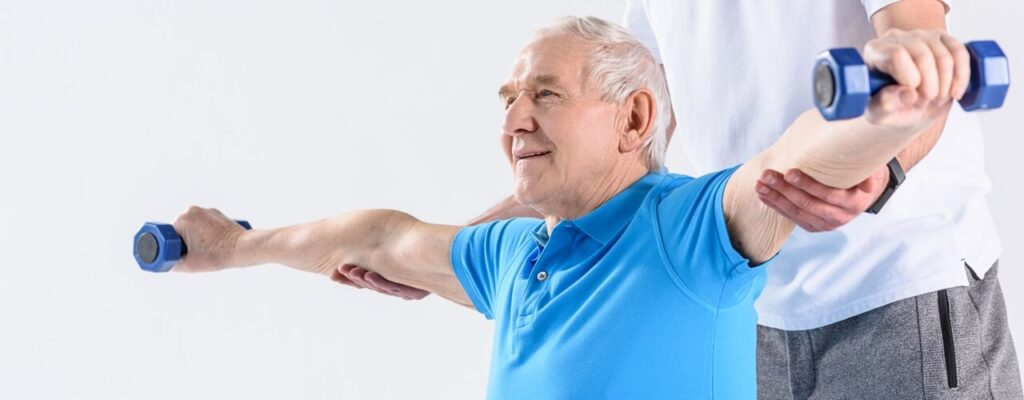
Do you know the early signs of Parkinson’s disease? They vary widely and can be difficult to spot. Many people recognize the tremors, but symptoms can also be cognitive impairment, changes in handwriting, and reduced sense of smell. There is no cure for the disease, but physical therapy programs with Parkinson’s disease exercises have been shown to improve mobility, balance, and overall quality of life for those living with the condition.
At Unified Rehabilitation, we have extensive experience designing programs specifically tailored to improve limitations caused by the effects of Parkinson’s disease. In this blog, we’ll take a look at two people whose Parkinson’s disease symptoms affected them differently to see how physical therapy helped their specific needs.
Discover how physical therapy’s Parkinson’s disease exercises can help you.
Individualized Parkinson’s Disease Exercises With Our Physical Therapists
A Case With Early Symptoms
“Mr. Jace” was diagnosed with Parkinson’s disease in his early sixties. For him, early signs of the disease included a slight tremor in his right hand, muscle stiffness, and the gradual slowing of movements. These limitations made it difficult for him to perform daily tasks, and he became increasingly sedentary.
When he first came to see us, he let us know he was determined to improve his mobility and independence. After setting expectations and agreeing on goals, we developed a personalized exercise program that included:
- Aerobic Exercise: Light activity to improve cardiovascular health and endurance.
- Strength Training: Resistance exercises targeting major muscle groups to combat weakness.
- Balance Exercises: Reduce his risk of falling by learning to navigate obstacles when walking and performing activities.
- Functional Training: Mimic daily tasks to help him regain his ability to perform them with confidence.
Our PT chose these exercises to address Mr. Jace’s specific symptoms of rigidity, slow movements, and postural instability. Regular appointments led to noticeable improvements in his symptoms, increasing his mobility and overall quality of life.
A Case With Worsening Symptoms
“Mr. Alex’s” battle with Parkinson’s disease began in his late fifties. Now that he’s in his late sixties, he is suffering from severe tremors and increasing difficulty balancing. Those symptoms caused him to have an intense fear of falling, which, in turn, significantly increased his risk of actually falling. With limited mobility, he could no longer work his active job as an engineer, which significantly reduced his overall quality of life and independence.
After evaluating Mr. Alex’s condition, we crafted a program that included cognitive and physical exercises to help him adapt to the need for new movements and boost his confidence. In the clinic, we focused on improving his approach towards daily and self-care tasks like standing from a chair, bathing, and opening, walking through, and closing doors.
In order to enhance his safety, reduce his risk of falls, and improve his outlook, we spent time on balance training both in the clinic so he could feel more confident outside of it.
- Mr. Alex practiced safe techniques for walking over and around obstacles on the floor while using his cane for assistance.
- We introduced gait training so he could learn proper stride length and walking patterns.
- He practiced navigating different types of terrain.
-
- Foam to simulate the potentially unstable feeling of walking or standing on grass.
- Hard surfaces set at different heights helped him practice walking up and down stairs in his home.
Mr. Alex’s dedication to improvement left him with the results he was looking for. He began to re-engage with social situations because he could navigate travel and movement confidently. His overall outlook and well-being improved because he was able to perform essential self-care tasks with limited assistance.
Both Mr. Alex and Mr. Jace continued to take their prescribed medications throughout treatment. Our physical therapy sessions added to their care by giving them the tools they needed to gain strength, increase mobility, and improve their overall outlook.
Personalized Therapy Solutions with Unified Rehabilitation
Don’t wait any longer to unlock your mobility and strength through targeted exercises and techniques. Our experienced team is ready to help you get the most out of your abilities.