

Improve in a Safe and Supportive Environment with Aquatic Therapy for Neurological Conditions
Many individuals worldwide agree that water, whether through the soothing sound of rain or unwinding in a hot tub after a long day, possesses a calming influence. So, it tends to reason that water would offer a healing experience for physical therapy exercises and rehabilitation programs. At Unified Rehabilitation, we know that aquatic therapy for neurological conditions offers a safe and effective way to strengthen muscles, build confidence, and restore function.
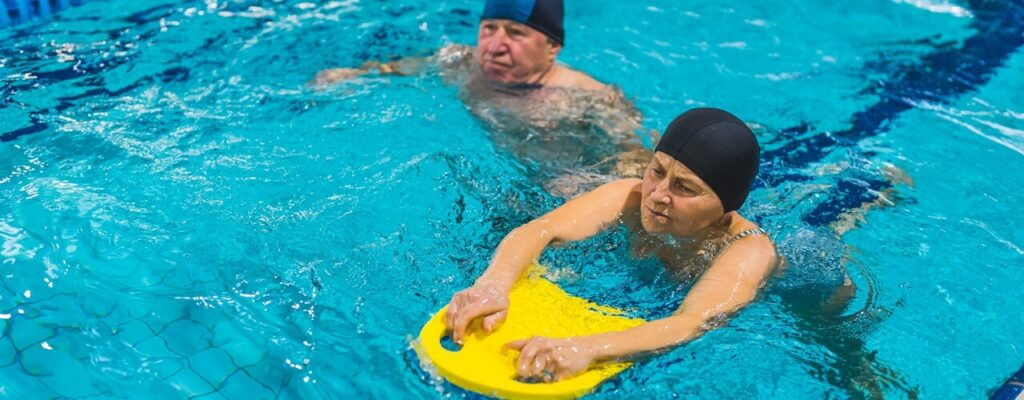
A great example of the comprehensive healing powers of aquatic therapy can be shown through two vibrant patients. Let’s follow along with their treatment in our aquatic center to learn about the personalized therapy programs we prescribed and how their hard work has paid off.
Discover how water-based exercises improve coordination and neuromuscular function.
Friends In and Out of Aquatic Therapy for Neurological Conditions
Aquatic therapy for neurological conditions involves tailored exercises performed in a pool or other aquatic setting under the guidance of one of our specially trained therapists. The water’s unique properties provide a safe and effective environment for patients to perform exercises that might be too difficult on land.
Two childhood friends, we’ll call them Mr. Joe and Mr. Paul, both suffered from neurological conditions that affected them in adulthood.
Mr. Joe was diagnosed with Parkinson’s disease, a condition caused by the breakdown or death of certain nerve cells in the brain. Many symptoms of this disease are due to a loss of dopamine, which allows the brain to communicate with the rest of the body. His symptoms included tremors, fatigue, difficulty balancing and walking, and muscle stiffness.
Mr. Paul, on the other hand, suffered a stroke that left him paralyzed on one side of his body. It impacted his speech and caused muscle weakness. His emotional health began to deteriorate due to the lasting effects of the stroke. The new limitations on his mobility and ability to verbally express himself left Mr. Paul feeling isolated and depressed.
These friends were determined not to let their conditions hold them back, so they decided to explore aquatic therapy together.
Physical and Emotional Success
For Mr. Paul, aquatic therapy focuses on improving muscle strength, balance, and range of motion. The buoyancy of the water reduces the stress on his joints, which allows him to perform exercises that help manage muscle spasms and improve coordination.
Mr. Joe’s therapy concentrates on regaining movement and strength on his left side. Supported by the water, Mr. Joe works on balance and functional movement exercises that aim to retrain his brain to recover as much mobility as possible. Aquatic therapy offers a unique advantage to stroke survivors like Mr. Joe because the water provides gentle resistance that helps build muscle strength without the risk of falls and injury.
Over time, Mr. Joe’s restored abilities positively affected his emotional state. He found that being in the supportive environment of our clinic was exactly what he needed in order to improve. His confidence grew with each new milestone he reached, and he began to spend more time with family and friends.
Aquatic therapy is an ongoing process for these friends. We challenge them with progressive exercises so they can continue to build strength and acquire new skills. Their hard work and determination have improved their quality of life and lightened their spirits.
Aquatic therapy is a key component of our treatment plans for various neurological conditions. If you or someone you know is experiencing limitations due to a neurological condition, give us a call. We’ll dive into aquatic therapy together for a supportive pathway toward recovery, confidence, and increased independence.