In the United States, someone suffers a stroke every 40 seconds. While medical advancements have made surviving a stroke more likely than ever, that survival brings with it a wide range of side effects affecting everything from movement to cognition. That’s why physical therapy for stroke is so important.
At Unified Rehabilitation, our physical therapists regularly work with stroke survivors to help address those side effects and help ensure a higher quality of life. We understand our patients have unique, diverse needs, so we design our treatment plans on a case-by-case basis.
To illustrate why you should utilize physical therapy for stroke rehabilitation, we want to share the story of one of our patients, a woman we’ll call Margaret.
How Margaret’s Stroke Affected Her Day-to-Day Life
Margaret was lucky enough to receive timely care when she suffered her stroke. However, because a stroke affects the brain, the damage can onset quickly–within a few minutes.
After her discharge from the hospital, Margaret struggled with the following:
- Weakness in the left side of her body, including her face, arm, and leg
- Impaired balance and regular bouts of vertigo
- An impaired gait and difficulty walking
Slurred speech and difficulty swallowing (due to her facial paralysis).
To help Margaret regain some of her independence and mobility, she began working with a physical therapist at our Winter Garden, FL clinic.
How Physical Therapy Helped Margaret Recover from Her Stroke
We began with a comprehensive assessment that looked at Margaret’s specific symptoms. Because most of her symptoms were movement-related, physical therapy was going to play a crucial role in her recovery.
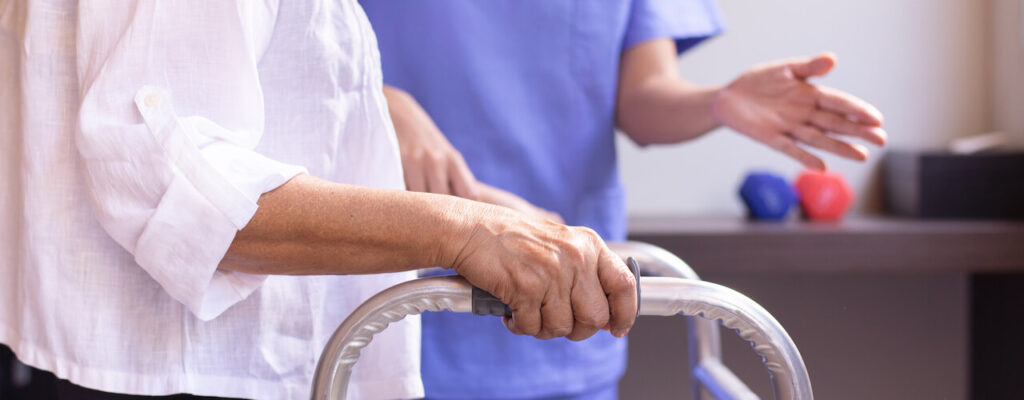
Our first goal was to help restore some of the strength to the left side of Margaret’s body. We developed a personalized strengthening program comprising simple movements Margaret could complete safely. Initially, we had her rise up from a chair and reach toward objects. As she showed signs of improvement, we began incorporating more challenging movements.
Our other goal was to improve Margaret’s balance and stability. Her balance stemmed partially from her weakened left leg but also from damage in her cerebellum (which was why she struggled with vertigo). We worked with her on simple balance challenges to improve her body’s spatial awareness as she worked to strengthen her leg and core.
We were also concerned about Margaret’s fall risk. Stroke survivors have a higher risk of suffering a fall, which can lead to injury and hospitalization. Working on her balance helped lower her risk somewhat, as did addressing her impaired walking pattern. We worked closely with Margaret to help her relearn how to walk, even with her new physical challenges.
Finally, we referred Margaret to a speech therapist, a specialist who could help her restore strength in her facial muscles–and, in doing so, make it easier for her to speak and swallow.
Learn More about Physical Therapy’s Role in Stroke Rehabilitation
A stroke is a major medical emergency, and it can have lasting after-effects. Most stroke survivors require a multidisciplinary care team to ensure all their needs are addressed. Physical therapy for stroke aftereffects is a key part of that care team.
If you’d like to learn more about how Unified Rehabilitation can help you or a loved one recover from a stroke, request an appointment with us today.